
Smart Control, Flawless Process
SCADA Automation for Plating Lines
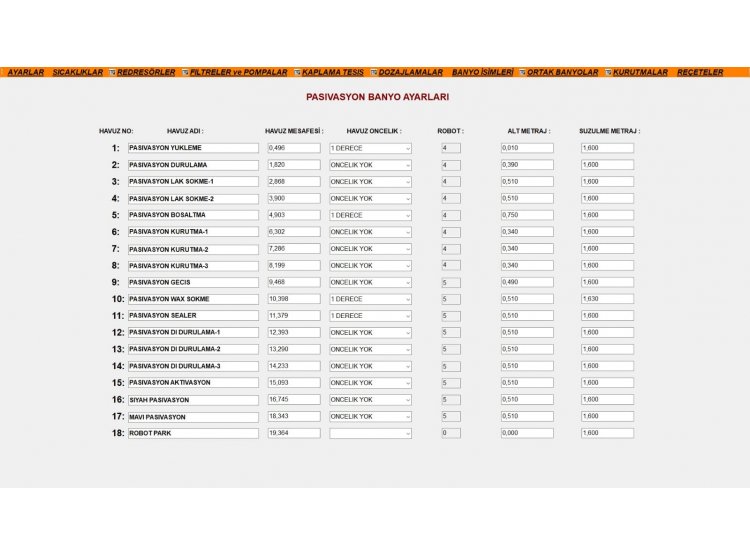
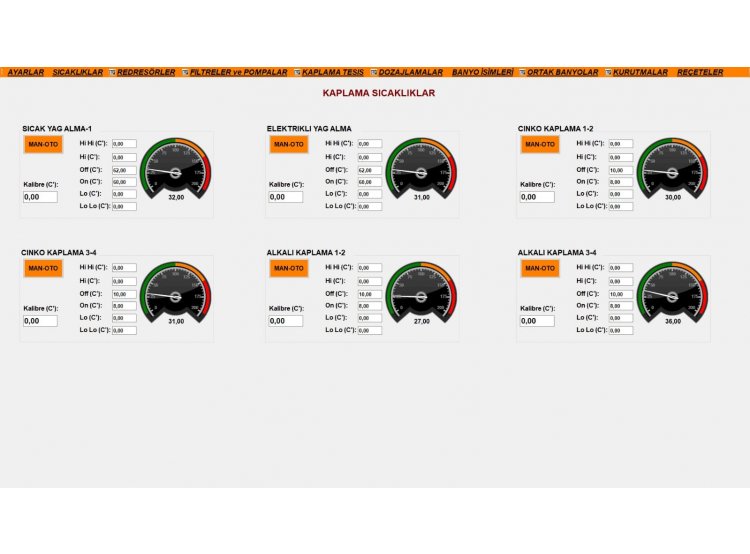
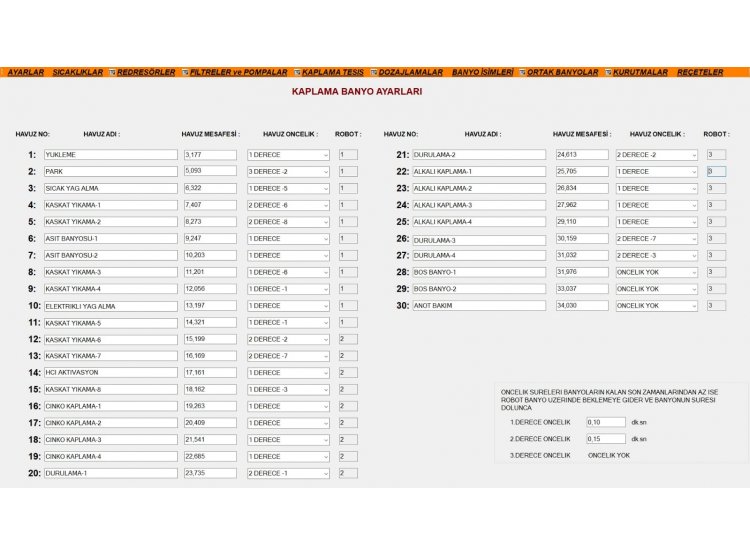
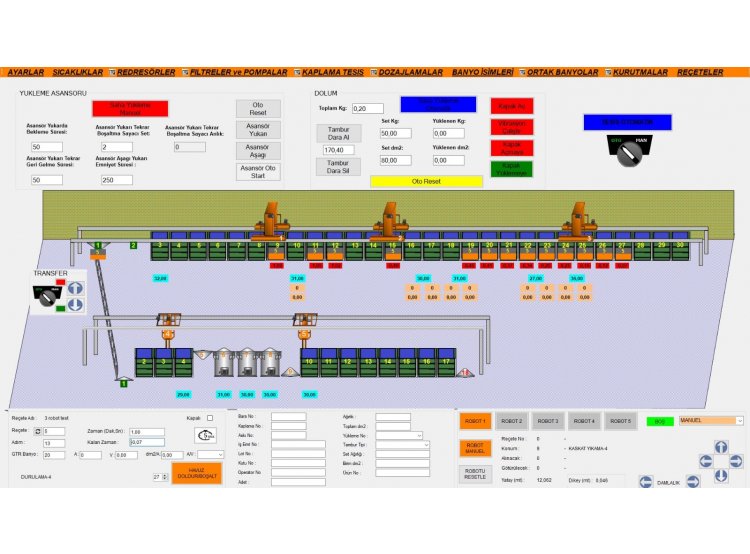
IDEA SISTEM develops SCADA automation systems for plating lines to control, monitor and record production processes from a centralized platform. The system can be accessed from an on-site PC and, depending on project requirements, remotely through connected devices.
Centralized SCADA Automation and Monitoring
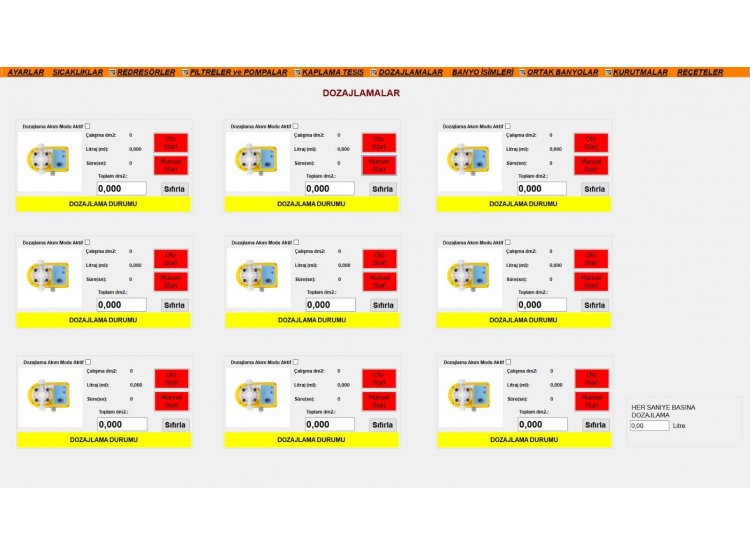
The SCADA automation system enables centralized control, real-time monitoring and data logging of active and passive equipment across the plating plant. Communication between the control system, field equipment and robotic transport systems is established through an industrial Ethernet infrastructure. Robots can communicate with the main control system through wireless connectivity. Positioning can be performed using laser distance sensors or barcode-based positioning systems according to the project requirements.Recipe Management in SCADA Automation
Recipes created through the SCADA system can contain the critical parameters required for each plating process, including:- Route map for racks or barrels
- Immersion and dripping times
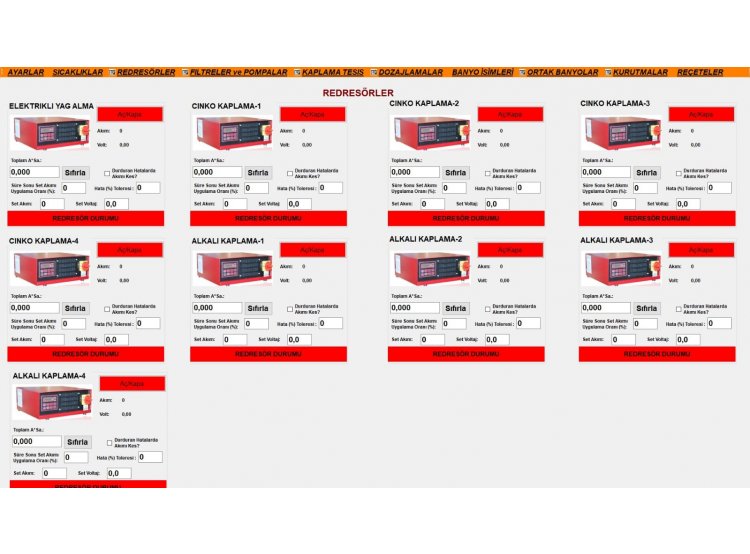
- Rectifier current and voltage values
- Delayed start times
- Lift-and-dip repetition counts
- Current density settings
- Barrel rotation and rack oscillation options
- Dripper control and speed settings
PLC-Supported Automated Operation
Selected active recipes can be stored in the PLC memory for automated operation. Different racks or barrels can be processed consecutively using different recipes. In the event of a PC failure, selected recipes can continue to be operated through the operator panel (HMI), depending on the configured automation architecture.Flexible Control with SCADA Automation
Depending on the plant configuration, one robot can be operated manually while another continues in automatic mode. This provides production flexibility during setup, maintenance or process intervention. Operators can intervene in selected parameters of an active recipe, including:- Recipe and recipe steps
- Immersion and dwell times
- Current and voltage values
- Work orders, lot and box numbers
- Quantity and weight information
- Busbar or barrel numbers
Robot Motion Control and Product Protection
Horizontal and vertical robot movements, acceleration and deceleration ramps can be controlled through the SCADA automation system. Smooth motion profiles help reduce unnecessary load oscillation during transport and support more controlled product handling.SCADA Automation for Different Surface Treatment Lines
IDEA SISTEM can apply SCADA automation to anodizing, zinc plating, phosphating, cataphoresis and other automated surface treatment lines. The control architecture can be adapted to the process sequence, transport system, rectifier configuration, production capacity and traceability requirements of each project.
Route map for racks or barrels
The SCADA automation system defines the complete process route for each rack or barrel. It determines which process tanks will be used, the sequence of operations and the required transfer steps.
Different products can follow different routes within the same plating line according to the selected recipe, allowing flexible production with multiple surface treatment processes.
Immersion and dripping times
Immersion, dwell and dripping times can be defined individually for every process tank within the recipe. These parameters are automatically followed by the robotic transport system during production.
Precise timing helps maintain consistent process conditions and allows different products or coating requirements to be managed through separate recipes.
Rectifier Current and Voltage Control
Rectifier current and voltage values can be stored directly within each process recipe. The SCADA automation system can send the required electrical parameters to the rectifier according to the active process step.
Current density and other electrical process parameters can also be configured according to the product, surface area and coating requirements.
Delayed Operation and Process Timing
Equipment such as rectifiers, pumps, mixers and auxiliary systems can be activated according to defined time delays and process sequences.
This allows the automation system to coordinate mechanical movement, electrical equipment and process timing within the same production recipe.
Dripping, Lift-and-Dip and Motion Control
Dripping times, lifting speeds and movement sequences can be adjusted to reduce chemical carry-over between process tanks. The system can also perform programmable lift-and-dip repetitions when required by the process.
Depending on the plating line, parameters such as barrel rotation, rack oscillation, robot speed, acceleration and deceleration ramps can also be integrated into the recipe and controlled through the SCADA system.
Surface Treatment Automation
Quality Control, Alarm and Reporting
The SCADA automation system can monitor critical process parameters and compare them with predefined operating limits. Depending on the project, limits can be defined for parameters such as:
- Processing and dwell time in each tank
- Rectifier current and voltage values
- Current density
- Process temperature
- Tank level and equipment status
- Recipe and production sequence
Based on the selected control criteria, production data can be evaluated and recorded for process tracking. Product, rack, barrel, lot or work-order information can also be linked to the process data where required.
Alarm and fault events can be stored in the system with time and equipment information. Historical records can be filtered and reviewed to support troubleshooting, maintenance and production analysis.
Detailed reports can be generated for production history, recipe execution, process times, electrical parameters and alarm records. This allows operators and production managers to review the performance of the plating line from a centralized SCADA interface.